


When the Museu de l’Art Prohibit (Museum of Prohibited Art) opened its doors in central Barcelona in October 2023, it sparked international interest by boldly confronting censorship, cultural suppression, and the politics of artistic expression. Promising more than two hundred works once banned, attacked, or suppressed for political, social, or religious reasons, it aimed to make visible what had been hidden, questioned or erased.
But less than two years later, on June 27, 2025, the museum closed its doors indefinitely — a surprising and controversial conclusion to one of Barcelona’s most talked-about recent cultural experiments.
A Vision Born from Censorship
The idea for the Museu de l’Art Prohibit grew out of collector and journalist Tatxo Benet’s long-standing interest in art that has been censored or condemned. Its genesis is often traced back to the 2018 ARCO art fair, where Benet acquired Santiago Sierra’s Presos Políticos en la España Contemporánea, a politically charged work that had been removed from that gallery due to controversy. Over the next five years, Benet amassed a collection of works that, for one reason or another, had been suppressed — some temporarily withdrawn from display, others banned outright.
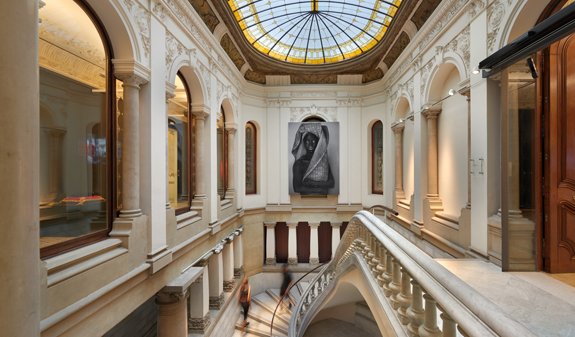
The Museo de l’Art Prohibit opened in October 2023 inside the modernist Casa Garriga Nogués, offering visitors an immersive exploration of the history and impact of censorship on art. In addition to its controversial core, the museum employed digital tools and multimedia documentation to contextualise each work, inviting visitors to contemplate why these pieces had once been excluded from public view.
From Celebration to Crisis
The museum quickly became one of Barcelona’s most unique cultural destinations, bringing together a wide range of artists whose work had provoked controversy — from historic figures like Picasso, Goya and Warhol to contemporary voices who challenged norms on politics, religion and society.
However, beneath the surface of its critical acclaim, operational challenges began to emerge. In early 2025, subcontracted museum workers represented by the union SUT (Solidaritat i Unitat dels Treballadors) began an indefinite strike demanding better conditions including breaks, ergonomic seating, fair pay and improved work conditions. Protests and pickets outside the museum persisted for months, drawing attention not only to worker rights but also affecting visitor numbers and the museum’s day-to-day functioning.
By June 27, 2025, those pressures culminated in an official announcement that the Museu de l’Art Prohibit was closing its physical location indefinitely. The founder cited unsustainable financial losses — revenue reportedly fell by as much as 75 % amid the ongoing protests — and a challenging environment for both staff and visitors. While legal inspections and mediation efforts had taken place, management concluded that operations could not continue.
What Happens Next?
Despite the closure of its Barcelona space, the museum’s organisers have stated that the collection will continue to “live” through a series of international, travelling exhibitions. Rather than ending the project, this shift aims to take the collection out of a static context and into a wider global conversation about censorship, artistic freedom and public discourse.
Still, the closure has sparked debate in cultural circles: a museum dedicated to defending voices that have been silenced itself faced a form of disruption rooted in unresolved workplace issues. Many see the irony in that juxtaposition as part of the ongoing dialogue about power, freedom, and the responsibilities of cultural institutions in a democratic society.
Stay close to the scene
FrikiFish is an independent project, built and run by one person, focused on documenting the creative scene around Barcelona.
If you want to keep up with new openings, artists, and opportunities, you can join the newsletter.
Even €2–€5 helps keep things going.
thank you
for being part
of this